Click any author’s name to read their Wikipedia biography. Archived works are linked under “Read”, and public domain Librivox recordings under “Listen”. More Oakland-specific details are available in links to the Oakland Wiki.
• Trees planted in 1930 • |
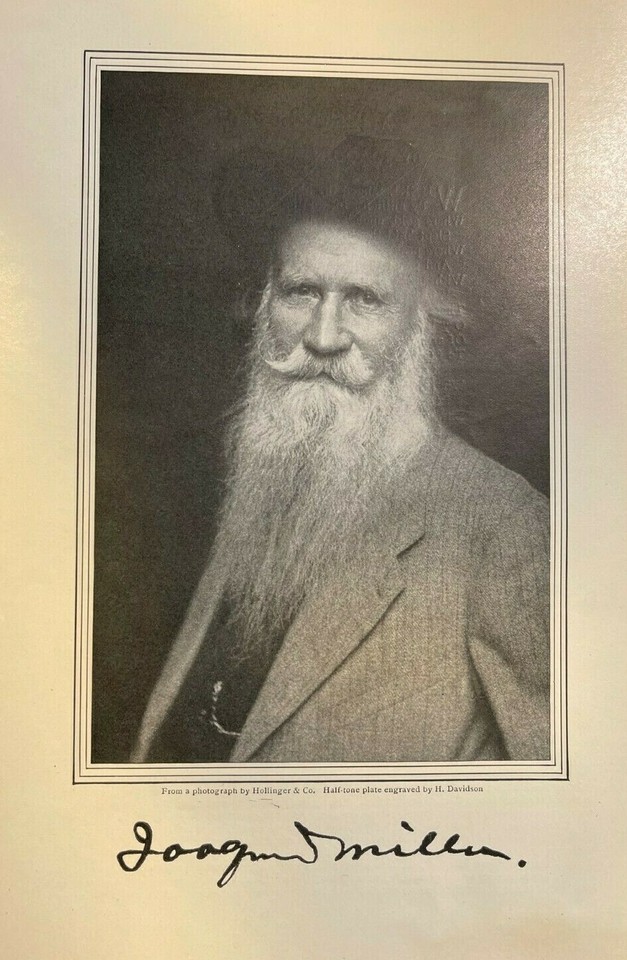 Joaquin Miller
September 8, 1837 – February 17, 1913
Books: Songs of the Sierras (1871) · Life Among the Modocs (1873) Play: The Danites in the Sierras · Poems: “Columbus” + hundreds more
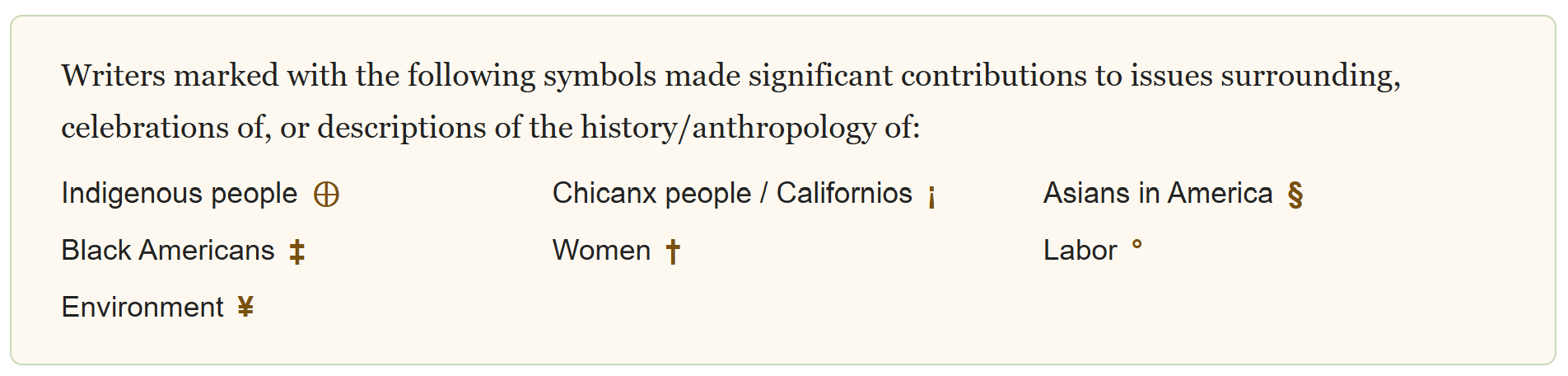
Known as the “Poet of the Sierras,” Miller was a colorful California figure who found fame in England before earning recognition in the U.S.. His verse celebrated the American West with romantic exuberance, and his eccentric personality inspired his public. His best-known poem, memorized by school children for over half a century, contains the stirring refrain, “Sail on! Sail on! Sail on and on!” He returned to California in 1856, and built an artist’s retreat he called “The Hights,” which became Joaquin Miller Park after his legendary death. A nearby elementary school is named after him as well. ~ ¡ § † ° ¥
Read | | Listen | | Oakland Wiki
 Jack London

January 12, 1876 – November 22, 1916
Novels: The Call of the Wild · White Fang, Martin Eden · plays: The Iron Heel · short story: “To Build a Fire”
Twice as prolific as Steven King in his short life, Oakland’s own Jack London was one of the first American writers to achieve international celebrity. His stories of adventure and survival in the wild, drawn from his own vivid experiences in the Klondike gold rush and the Pacific, are still internationally beloved, and his writings on radical politics, class struggle, and the labor movement helped shape our country. His Beauty Ranch in Glen Ellen is now Jack London State Park, and the cabin where he lived in Alaska was reconstructed in Jack London Square next to Oakland’s oldest bar, Heinhold’s First and Last Chance Saloon where he did his homework as a child growing up on the waterfront. °
Read | Listen | Oakland Wiki
 Charles Warren Stoddard

August 7, 1843 – April 23, 1909
Books: South Sea Idyls (1873), In the Footprints of the Padres; Essays: Exits and Entrances (1908), Ada Clare, the Queen of Bohemia (1905)
Charles Stoddard was a central figure in San Francisco’s literary circle when it galvanized in the 1860s. A poet, novelist, and travel writer, Stoddard co-edited the influential Overland Monthly with Bret Harte and Ina Coolbrith — a magazine that published early work by many of the state’s greatest writers and launched many careers. Stoddard’s captivating stories about the Pacific Islands influenced later writers such as Robert Louis Stevenson and Jack London. In London, he edited Mark Twain’s Roughing It. He was also romantically involved with the Japanese poet, Yone Noguchi. ?
 Bret Harte

August 25, 1836 – May 5, 1902
Stories: “The Luck of Roaring Camp” ; Columns: Bohemian Papers (1867) · Bohemian Days in San Francisco (1903)
The stepson of Oakland’s fourth mayor, Bret Harte broke the story of the Wiyot massacre in Humboldt county before becoming a protegé of orator Thomas Starr King in San Francisco. He brought the Overland Monthly to national recognition as editor, even as he kept his day job at the San Francisco Mint. His vivid and humorous poetry, plays, lectures, book reviews, editorials, and magazine sketches defined images of the California Gold Rush mining camps and frontier life. Harte gained international fame with “The Luck of Roaring Camp,” but when he moved East to edit the Atlantic Monthly, his career fizzled. Harte had first a friendship then a rivalry with Mark Twain. There are three Bay Area schools named for this writer, one just down the hill from Joaquin Miller Park. ~
Read | Listen | Oakland Wiki
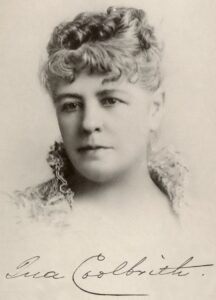 Ina Coolbrith
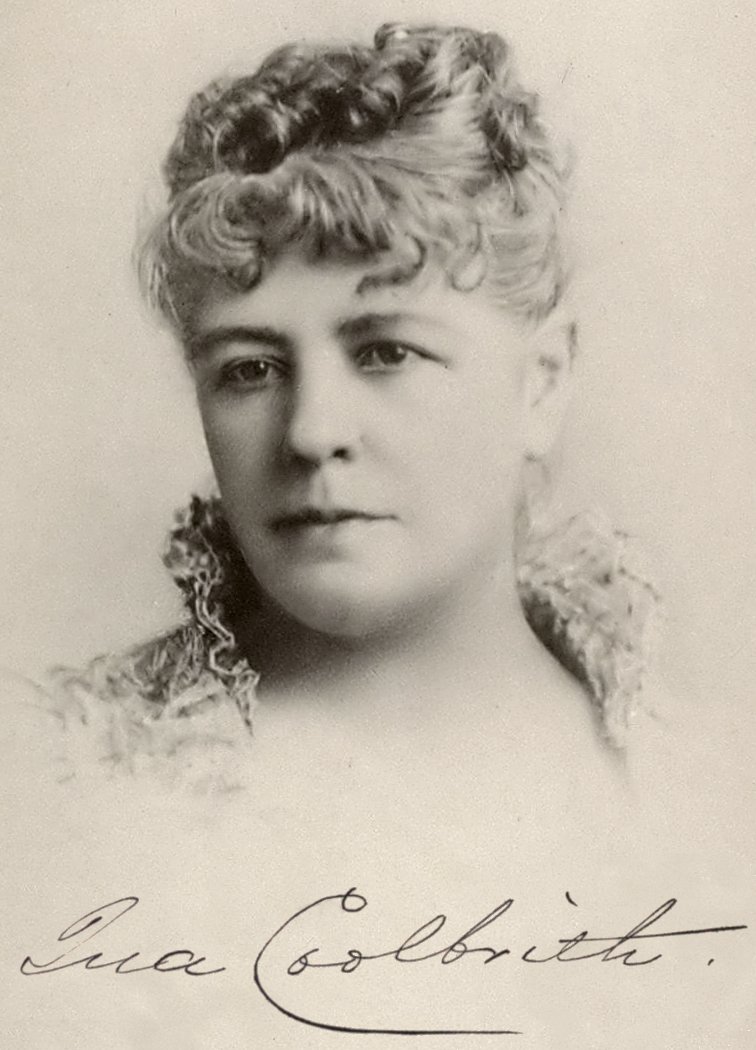
March 10, 1841 – February 29, 1928
Poetry collections: The Singer of the Sea · Wings of Sunset; Poems: Copa de Oro and dozens more
Ina Coolbrith is remembered as California’s–and America’s—first Poet Laureate. A beloved poet, co-editor of the Overland Monthly, and mentor to writers and artists such as Joaquin Miller, Jack London, and Isadora Duncan, she was Oakland’s first city librarian, helped Miller establish Arbor Day in California, and helped organize the 1915 Pan-Pacific Exhibition. Coolbrith is also one of the few women to be members of the Bohemian Club, where she worked as secretary/librarian in the early 1900s. She was good friends with John Muir and Gertrude Atherton, and raised white Angora cats. There is a park dedicated to her in San Francisco, and a mountain named after her near Beckwourth Pass where she first entered California as a child with the pioneer pathfinder himself. She founded the Coolbrith Poetry Circle which continues to thrive.
 Samuel L. Clemens / Mark Twain

November 30, 1835 – April 21, 1910 Books: Adventures of Huckleberry Finn · The Adventures of Tom Sawyer · A Connecticut Yankee in King Arthur’s Court · Roughing It · The Innocents Abroad, The Gilded Age; Short stories: The Celebrated Jumping Frog of Calaveras County Dubbed “the father of American literature” by later authors, Mark Twain found his humorous literary voice in California in the 1860s writing about Gold Rush miners and then satirizing San Francisco society. His reporting on “The Sandwich Islands” (Hawaii) laid the foundation for his spectacular lectures and travel writing to Europe and the Middle East that brought him international fame. Like other California writers, Twain spoke out against imperialism when he matured as a writer. ~ ‡
 Edward Roland Sill

April 29, 1841 – February 27, 1887
Poem: “A Fool’s Prayer” · Essays on literature and education
Edward Roland Sill was a high school teacher at an Oakland high school and an English Professor at UC Berkeley, a member of the first California literary circle and a nationally published poet and essayist admired by his contemporaries.
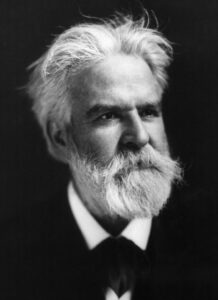 Edwin Markham
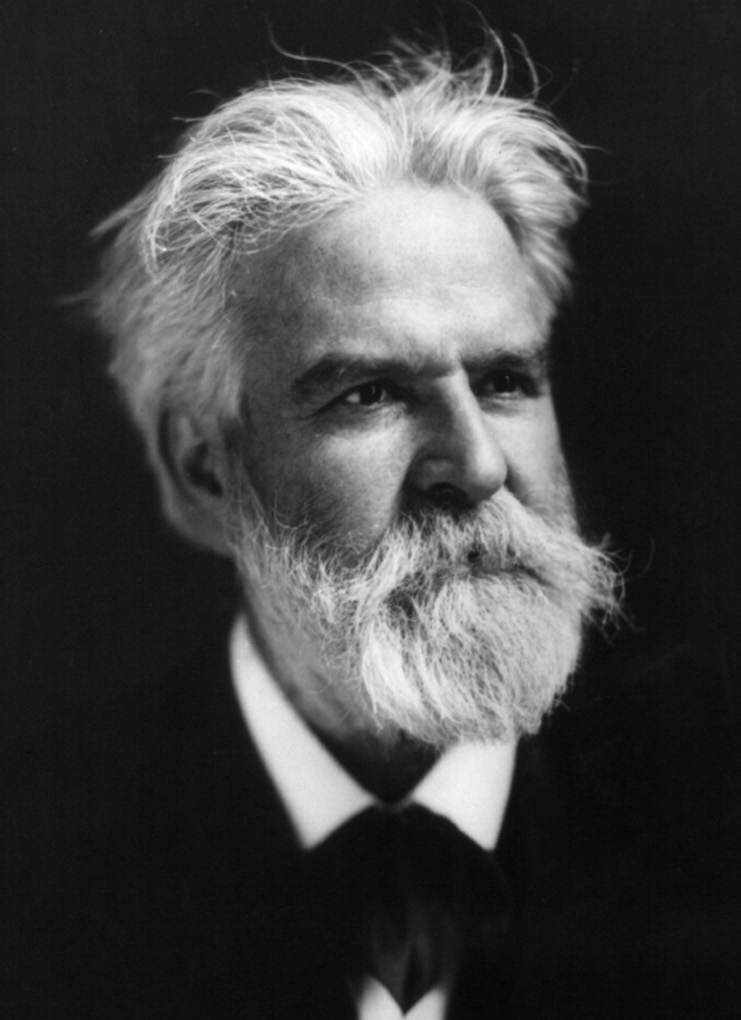
April 23, 1852 – March 7, 1940
Poems: “The Man with the Hoe” (1899) · Lincoln, and Other Poems (1901)
Oregon’s first Poet Laureate once lived in the Oakland Hills where the Mormon Temple now stands. Inspired by a painting (now at the Getty Museum), Edwin Markham‘s groundbreaking poem, “The Man with the Hoe,” created empathy for laboring farmers, and was translated into dozens of languages. are many schools named after him, including one in Oakland, where he was a school principal. Markham read a poem at the dedication of the Lincoln Memorial. You can visit his home at the San Jose History Park. °
Read | Listen | Oakland Wiki
 John Muir
April 21, 1838 – December 24, 1914
Books: A Thousand-mile Walk to the Gulf Picturesque California and dozens more dozens of essays, plus hundreds of books about him
There are dozens of landmarks and institutions named after naturalist John Muir, who was instrumental in establishing Yosemite as a national park. This Scottish native founded the Sierra Club, and formed national and global conversation around preservation and conservation.°
Read the 1941 Dedication of the Woodminster Cascade |
• Trees planted in 1942 • |
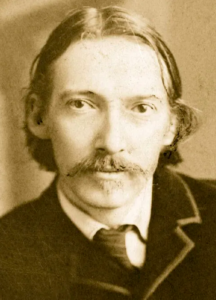 Robert Louis Stevenson
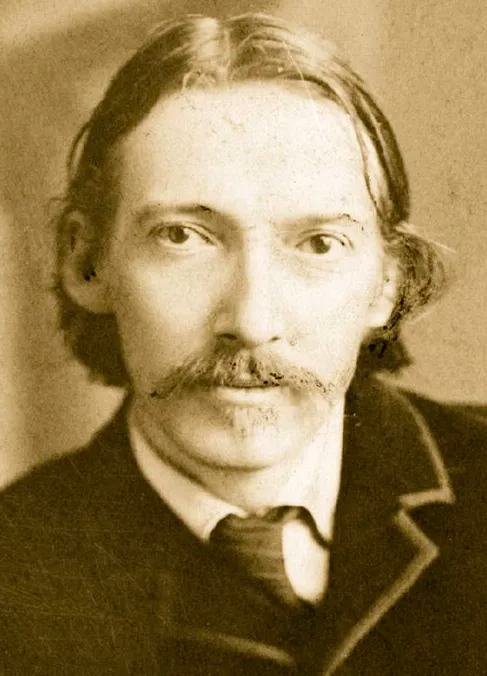
November 13, 1850 – December 3, 1894
Books: Treasure Island (1883) · The Strange Case of Dr. Jekyll and Mr. Hyde (1886) · The Silverado Squatters (1883) · Kidnapped (1886) · A Child’s Garden of Verses; essay; “The Old Pacific Capital”
This Scottish writer was embraced by California because he came here for love, married Oakland mom Fanny Osbourne, and wrote some enduring pieces about early California life. Best known for his suspenseful stories, Robert Louis Stevenson was also a well-known political writer, defending Polynesian culture against European colonizers. Stevenson had many friends in common with Joaquin Miller, in California, New York, and London, where they both began their careers in the early 1970s. Both wrote against tyranny, empire and corruption, and are still regarded for their legacy of humanist writings. ~
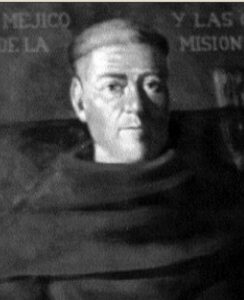 Father Francisco Palóu
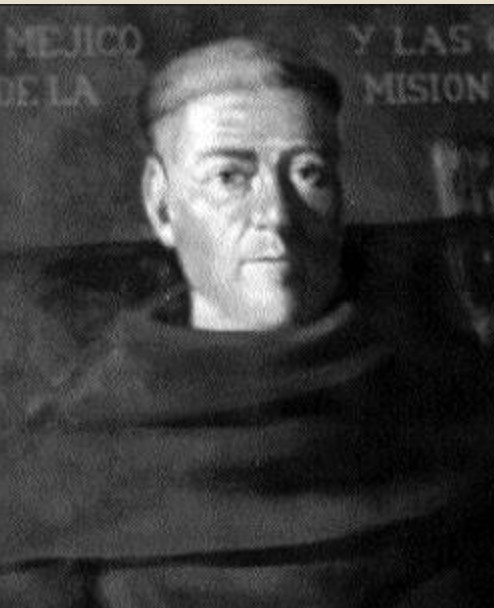
1723 – 1789
Book: Relación histórica de la vida… del padre Junípero Serra · Noticias de la Nueva California
A Franciscan friar and close companion of Father Junípero Serra, Palóu wrote the first history of California, when it was under Spanish rule. ~ ¡
• Trees planted in 1945 • |
 Hubert Howe Bancroft

May 5, 1832 – March 2, 1918
Books: History of California (7 vols.) · History of the Pacific States (28 vols.) · founder, Bancroft Library, UC Berkeley
Hubert Howe Bancroft was a book seller, historian, and author of a 39-volume collection of histories of western North America and Central America. He employed writers and wrote some of the material himself, though, unfortunately he fit Mexican narratives into a gold rush lens, and credited only himself as an author. His personal library was donated to UC Berkeley and is now one of the foremost archives of Western Americana and a precious repository for California historians. ~ ¡
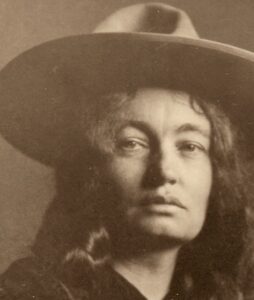 Mary Hunter Austin
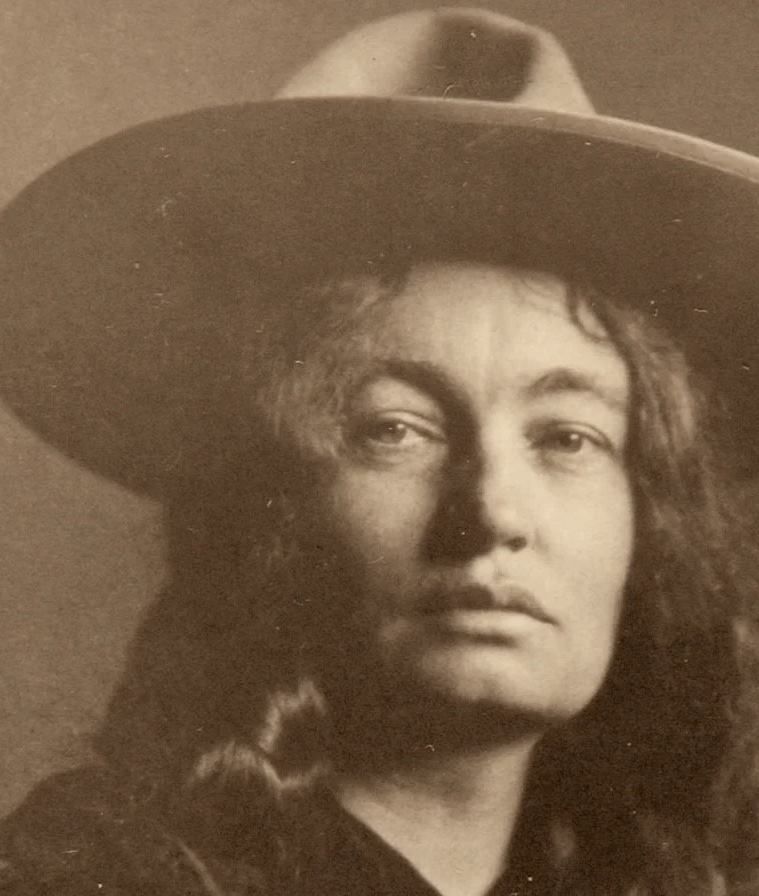
September 9, 1868 – August 13, 1934
Books: The Land of Little Rain (1903) · Isidro · Santa Lucia · Earth Horizon (autobiography) A Woman of Genius
More interested in Mexicans, mining camps, and indigenous people than her own homesteaders, unconventional Mary Hunter Austin was known for walking in deserts. A seer, empath, and activist, she broke literary ground with her 32 books and 200+ short pieces that established her as an early ecofeminist. She became a writer in Inyo County, where her home now is a historical landmark, became prolific writing in a treehouse studio in Carmel-by-the-Sea, traveled and wrote spiritually in Italy, and settled in Santa Fe, New Mexico where she lectured and wrote. Her play about a Paiute woman played on Broadway in NYC, she collaborated on a book with Ansel Adams , and she fought for indigenous rights and women’s rights. Like Joaquin Miller, she was expected to become a literary fixture, but was lost to history. “I know the relation of letter and landscape.” Learn more about Austin. ~ † ¥
• Trees planted in 1947 • |
 The Norris Family

Frank Norris (1870–1902) · Charles Norris (1881–1945) · Kathleen Norris (1880–1966)
Frank: McTeague (1899) · The Octopus (1901) · The Pit (1903) | Kathleen: Mother (1911)· You Can’t Have Everything (1937) · Certain People of Importance (1922) | Charles: Brass (1921) · Salt (1917) · Zelda Marsh (1927)

Kathleen and Charles Norris
Frank Norris, his brother Charles Norris, and their sister-in-law Kathleen Norris, were all household names in their time. Frank Norris was one of the great naturalist novelists of American literature, telling starkly realistic stories of California politics before he died at only 32. Charles Norris wrote socially conscious realist novels, tackling subjects like birth control and alcoholism with unusual candor. Kathleen Norris was one of the most widely read American novelists of the 20th century, celebrated for her warm, sweeping portraits of California family life.
Frank: Read | Listen Charles: Read | Listen |Kathleen: Read | Listen
• Trees planted in 1950 • |
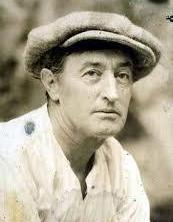 George Sterling
December 1, 1869 – November 17, 1926
Poems: “A Wine of Wizardry” · “Before the Gringos Came” (1894) · The Testimony of the Sun (1903) · Bohemian Grove plays: The Triumph of Bohemia (1907) · Truth (1926)
During George Sterling‘s thirty-year career as a writer, he wrote songs, plays, movies, short stories, essays, and more than a thousand poems. His works were published in most American literary magazines, in more than a hundred newspapers, in anthologies, and in his own books. He earned several literary awards, but was most touched by his epithet of “San Francisco’s Favorite Poet,” expressed by an archway entrance to the 1915 Pan Pacific Exhibition, where his name was carved in stone along with Homer, Shakespeare and, Milton. Sterling captured the zeitgeist of hit time carousing with Ambrose Bierce and fellow Oaklanders Jack London and Joaquin Miller, and was a founder of the arts colony Carmel-By-the-Sea (where he was known as “The Uncrowned King of Bohemia”), the Bohemian Club, and the California Writers Club.
Read | Listen | Oakland Wiki
• Trees planted in 1954 • |
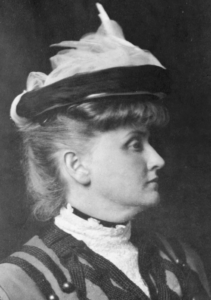 Gertrude Atherton
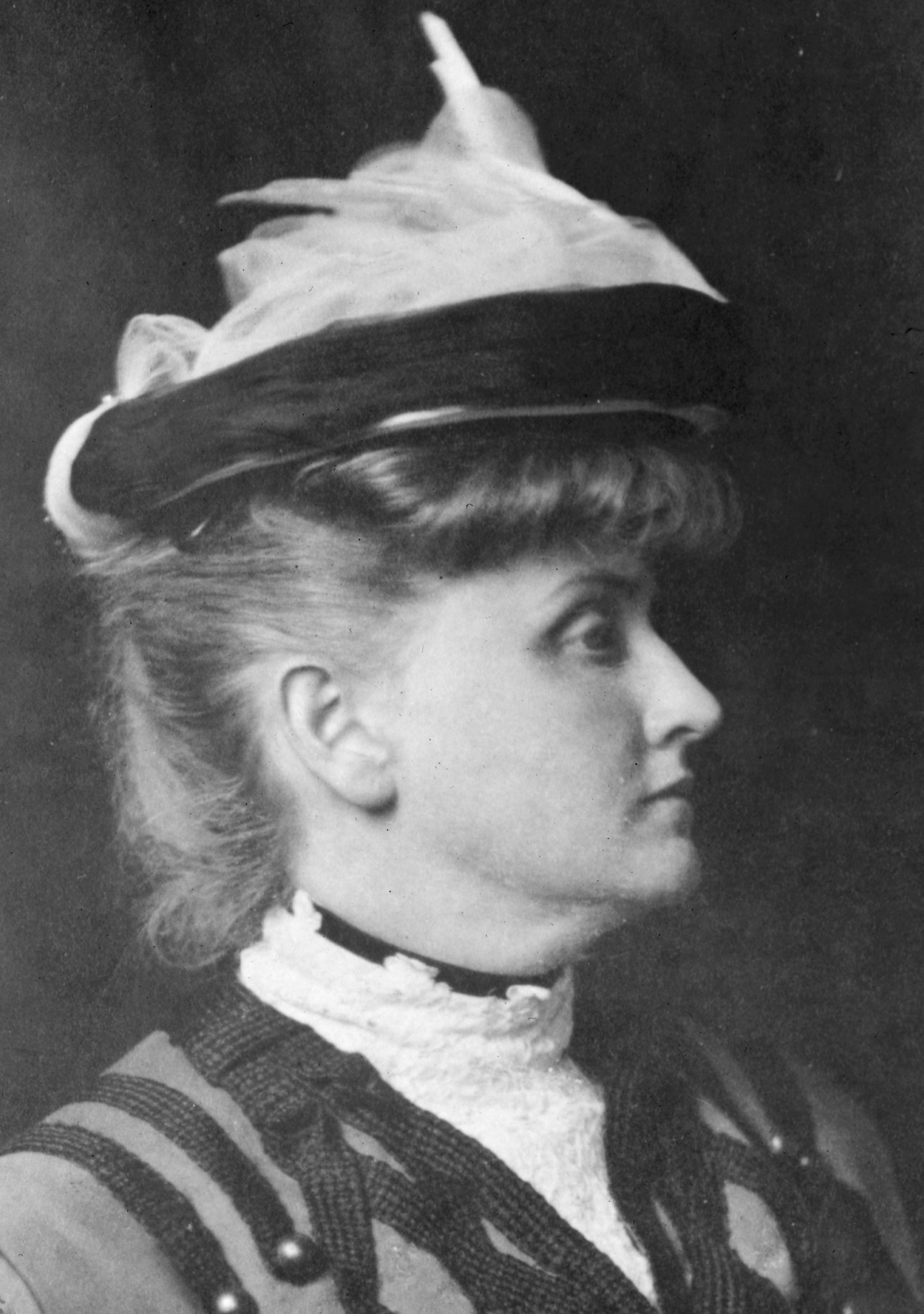
October 30, 1857 – June 14, 1948
The Conqueror (1902) · The Randolphs of Redwoods (1883) · The Californians (1898) · California, an Intimate History (1915) · Can Women Be Gentlemen? (1938)
Before there was Lin Manuel Miranda, there was Gertrude Atheron keeping Alexander Hamilton in the public eye. Prolific and outspoken, Atherton wrote glamorous historical fiction celebrating California’s Spanish and pioneer past. She lived to age 90 and remained a sharp commentator on American culture, women’s independence, and California society throughout her remarkable career. She authored more than 55 books and was a feminist beacon in San Francisco. ¡
• 1955 — Fountain Dedication • |
 Gertrude K. Mott

Book: Handbook of Californiacs
Wife of Oakland Mayor Frank Mott, Gertrude Mott was an active figure in California civic and literary life, Mott’s delightful handbook chronicled the personalities of early California’s literary and public world, and included a pronunciation guide to the Spanish and Indigenous names in the state, plus famous poems of her time. The fountain (pool) a the bottom of the memorial grove honored her for her work bringing the WPA and leading the effort to give Oakland the magnificent Woodminster Cascade and theater. ¡
• Trees planted in 1959 • |
 Herbert Eugene Bolton

Books: The Spanish Borderlands (1921) · Rim of Christendom (1936)
Also known as Eugene Bolton, Herbert Eugene Bolton was a Historian at UC Berkeley and longtime director of the Bancroft Library. He revolutionized the study of American history by insisting that the Spanish borderlands — and what is now California — were central to understanding the continent. His “Bolton thesis” argued the Americas should be studied as a unified historical entity. He trained generations of historians of the American West and the Spanish colonial era. ¡
• Trees planted in 1960 • |
 Agnes Morley Cleaveland
October 7, 1874 – September 23, 1958
Books: No Life for a Lady (1941) · Satan’s Paradise ·
Agnes Morley Cleaveland‘s memoir is a beloved classic of American frontier literature — a funny, vivid account of growing up on a New Mexico cattle ranch in the 1880s and ’90s. Widely praised for its authenticity and humor, it remains one of the finest portraits of ranch life ever written. Cleaveland was also an active leader in the California Writers Club, serving as President in 1937–1938. †
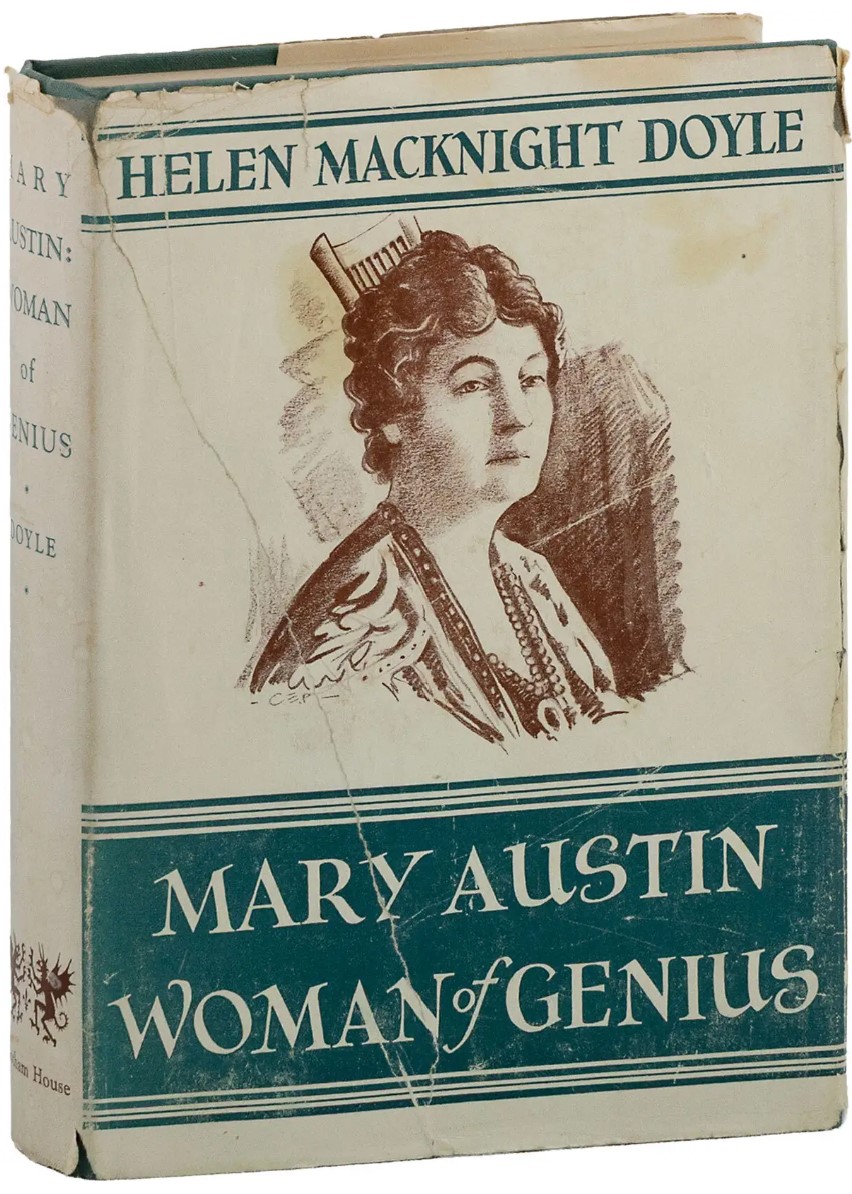
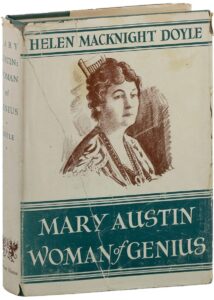 Helen MacKnight Doyle
1873 – 1957
Book: Doctor Nellie: The Autobiography of a Woman Pioneer · Mary Austin: Woman of Genius
A pioneering woman physician, Helen MacKnight Doyle was among the first female doctors to practice medicine in the remote Eastern Sierra communities of Inyo County. Her memoir chronicles her remarkable career at the turn of the 20th century, offering a vivid account of frontier medicine and the challenges faced by women in the profession. She also wrote a biography of her nemesis-turned-friend, Mary Hunter Austin. †
• Trees planted in 1980 • |
 Robinson Jeffers
January 10, 1887 – January 20, 1962
Books: Tamar and Other Poems (1924) · Roan Stallion (1925) · The Women at Point Sur (1927) · Medea (1946, adaptation)
Robinson Jeffers was a notable American poet who spent most of his life in Carmel, California, in a granite house that he built with his own hands. From “Tor House” and the dramatic central coastline he drew the imagery for his powerful, often dark narrative poems. His philosophy of “inhumanism” — placing the natural world above human concerns — was decades ahead of its time, and his work remains among the most distinctive in American poetry. †
• Trees planted in 1981 • |
 John Steinbeck

February 27, 1902 – December 20, 1968
Books: The Grapes of Wrath (1939, Pulitzer Prize) · Of Mice and Men (1937) · East of Eden (1952) · Cannery Row (1945)
John Steinbeck was California’s first native novelist to win the Nobel Prize for Literature (1962). The Grapes of Wrath is still required reading in many schools, depicting the struggles of Dust Bowl migrants arriving in California’s agricultural valleys, based on research by the uncredited Sanora Babb. Steinbeck’s name is synonymous with Monterey County, whose fishermen, farm workers, and dreamers infused his best work with an enduring humanity and authenticity. His museum in Salinas is worth a special trip! °
• Trees planted in 1984 • |
 Dashiell Hammett

May 27, 1894 – January 10, 1961
Books: Red Harvest (1929) · The Maltese Falcon (1930) · The Thin Man (1934)
The father of hard-boiled detective fiction spent years in San Francisco as a Pinkerton detective before channeling that experience into his novels. The Maltese Falcon (1930), set in San Francisco and featuring private eye Sam Spade, defined a literary genre and was immortalized on screen by John Huston and Humphrey Bogart. Hammett transformed the detective story from a puzzle into a portrait of moral ambiguity.
• Trees planted in 1985 • |
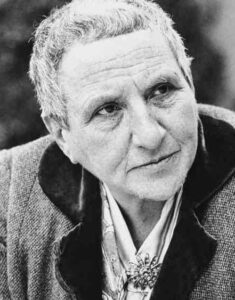 Gertrude Stein

February 3, 1874 – July 27, 1946
Books: Three Lives (1909) · Tender Buttons (1914) · The Making of Americans (1925) · The Autobiography of Alice B. Toklas (1933) · operas with Virgil Thomson: Four Saints in Three Acts (1934) · The Mother of Us All (1947)
Oakland-born Gertrude Stein became one of the most influential literary figures of the 20th century from her famous Paris salon, where she mentored Hemingway, Picasso, Matisse, and a generation of modernists. Her experimental prose pushed language toward abstraction, challenging the conventions of narrative and grammar. Famously partnered with another woman, Alice B. Toklas, Stein’s wry observation about her home town — “there is no there there” — is perhaps the most quoted sentence about any American city. †
Read | Listen | Oakland Wiki
 Gelett Burgess

January 30, 1866 – September 18, 1951
Editor: The Lark (1895–1897) · Lady Mechante (1909) · Books: “The Purple Cow” (1895) · “The Goops” 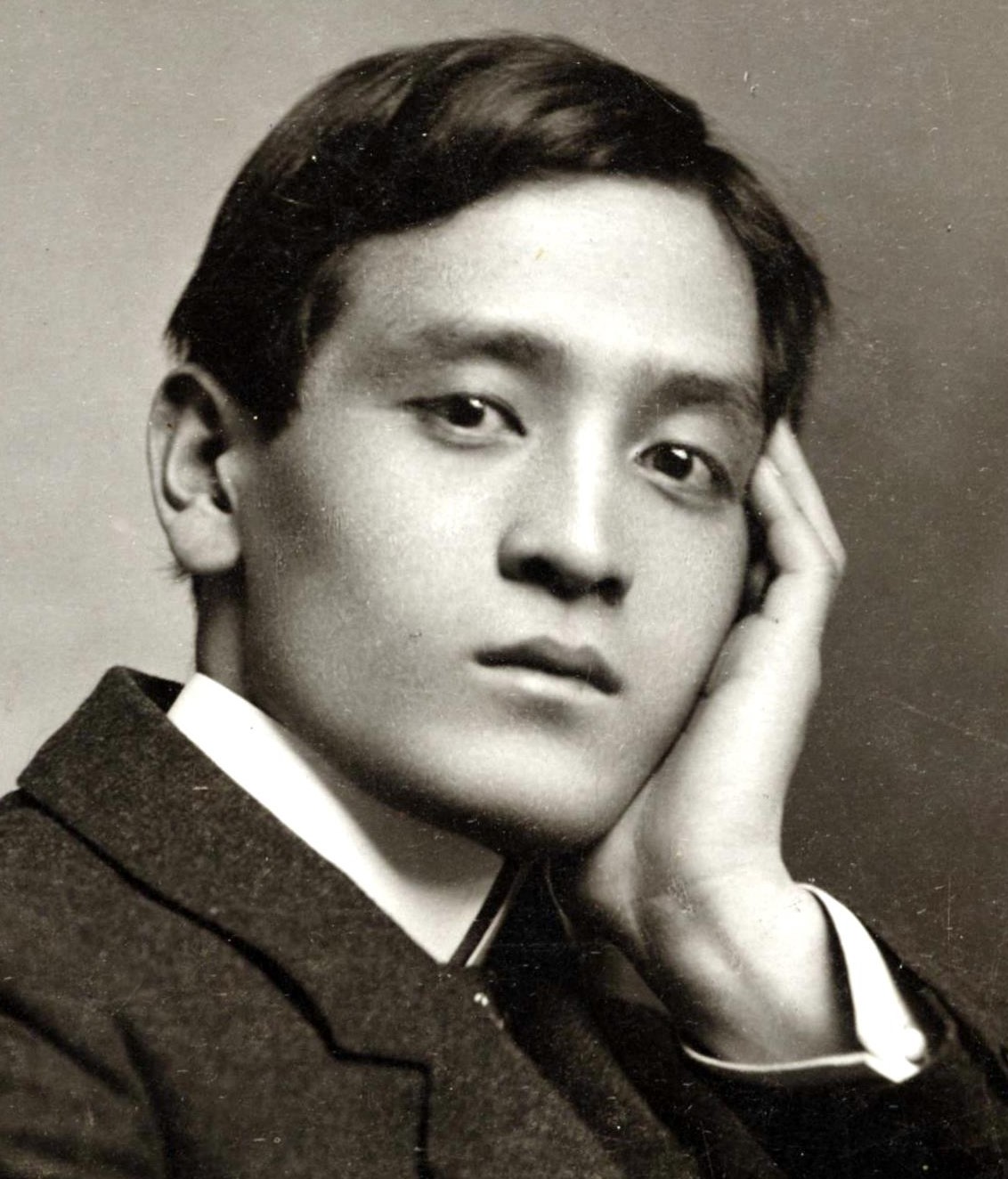
Gelett Burgess was a beloved San Francisco literary eccentric who frequented Miller’s outdoor salons. He published The Lark (1895–1897), a landmark of the American Arts and Crafts movement and the little-magazine tradition. His immortal four-line poem about the Purple Cow charmed readers worldwide, though he later tired of its fame. He is also credited with coining the word “blurb” — the promotional text printed on book jackets—and his funny children’s poem, “The Goops.” Through Joaquin Miller, Burgess discovered and first published Yone Noguchi, father of sculptor Isamu Noguchi, who was the first Japanese poet to publish in the English language and the poet who brough Haiku to America.
 Will and Ariel Durant

Will: November 5, 1885 – November 7, 1981 · Ariel: May 10, 1898 – October 25, 1981
Books: The Story of Philosophy (1926) · The Story of Civilization (11 vols.) · The Lessons of History (1968) · Pulitzer Prize: Rousseau and Revolution (1967)
This husband-and-wife team produced The Story of Civilization, one of the best-selling works of popular history ever written, synthesizing art, science, religion, and politics across 11 sweeping volumes and five decades of collaboration. Will’s earlier The Story of Philosophy (1926) brought philosophical ideas to millions of general readers and remains in print today. Their final volume, The Lessons of History, won the 1967 Pulitzer Prize for General Nonfiction. ~ ¡ § †
• Also honored `~ No Tree • |
 Harry Noyes Pratt

July 14, 1879 – May 19, 1944
Books: Mother of Mine and Other Verse (1918) · Hill Trails and Open Sky: A Book of California Verse (1919) · Operetta, Atlantis (1926)
California voice Harry Noyes Pratt lived in Lodi, Alameda, Berkeley, and Sacramento. Like Miller, Coolbrith, Stoddard and Harte, he served as editor of The Overland Monthly. He was also art critic of the San Francisco Chronicle, and curator and/or director of both the Haggin Museum in Stockton and the Crocker Art Museum in Sacramento. Pratt wrote poetry and short stories for numerous magazines and anthologies, and an operetta. His poem “Woodminster” celebrated the building of the outdoor amphitheater in the Oakland hills. ¥
 Wilhelm Nahl Perham
January 11, 1869 – April 9, 1935
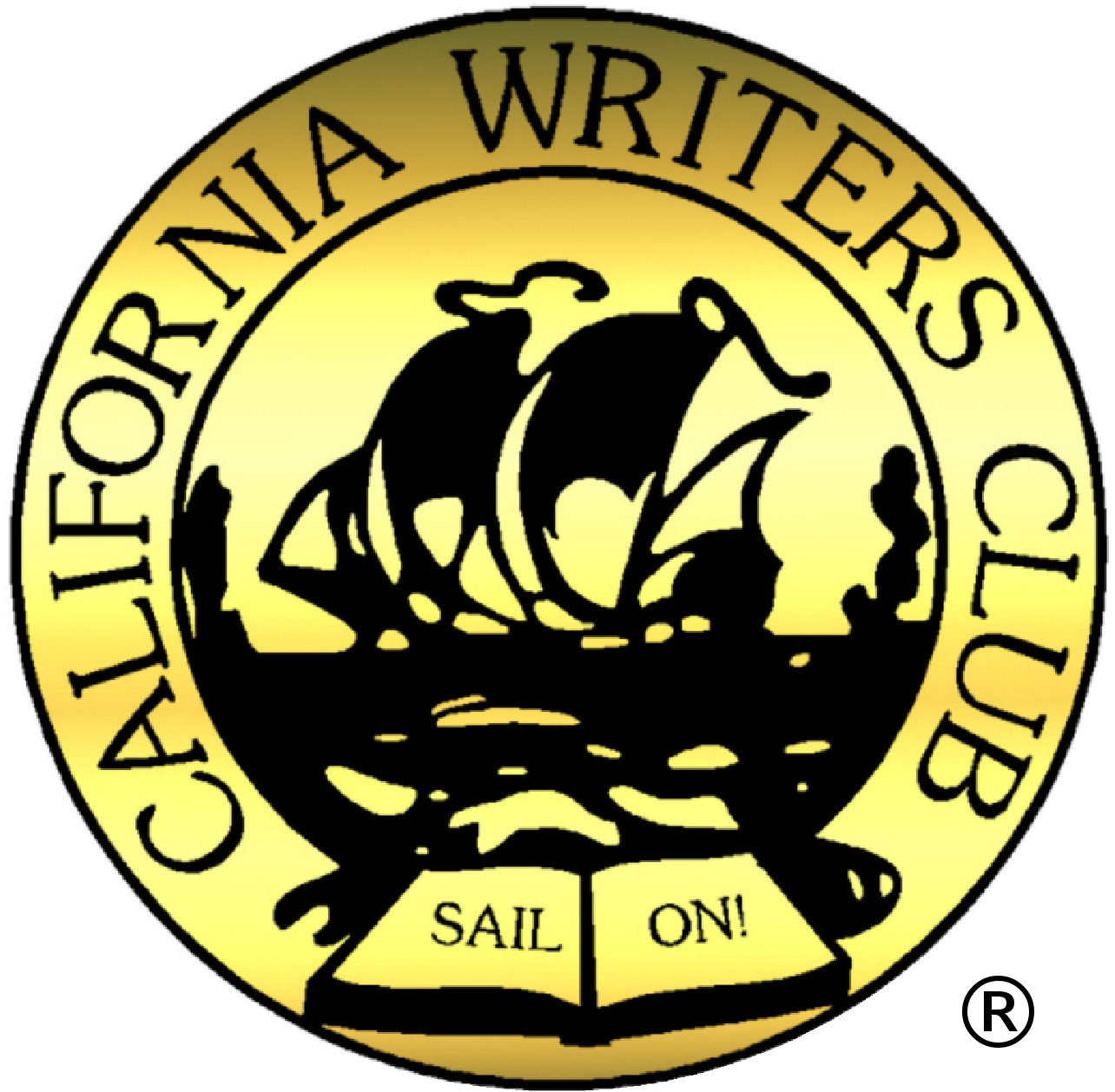
San Francisco-born artist and designer at the California School of Arts and Crafts, Wilhelm Perham Nahl designed the California Writers Club seal — a Spanish ship with a book bearing the motto “Sail On” after Joaquin MIller‘s most famous poem, flanked by laurel and pine branches. He helped found the California Guild of Arts and Crafts with Frederick Meyer in Berkeley in 1907.
 Dane Coolidge and Mary Roberts Coolidge

Co-authored: Navajo Indians (1939) · The Last of the Seris (1939) | Dane: Rimrock Jones (1917) · Hidden Water (1910) | Mary: Chinese Immigration (1909) · Why Women Are So (1912)
 Dane Coolidge was a prolific Western novelist and naturalist photographer; Mary Elizabeth Coolidge was a sociologist and author. Together they wrote about Indigenous cultures of the Southwest. Mary founded the Sociology department at Mills College, and served as a California Writers Club president. ~ †
John (Johnny) Noble
I Want to Quit Winners (1961) · Never Plead Guilty (1963) · Its Name was M.U.D (1970)
A California Writers Club president, Johnny, also known as John Wesley Noble, wrote a book about East Bay MUD, and was working on a biography of fitness pioneer Jack LaLane. Like Joaquin Miller’s 1891 trouble with a horse thief who identified himself as his son, a younger person with Noble’s name pled guilty to murder in 2015, no relation.
 This page was researched and written by The California Writers Club‘s first Writer in Residence at Joaquin Miller Park, Kristen Caven, who compiled the records kept by past Berkeley Branch president, science fiction writer Ray Faraday Nelson, and did further research at the library archives. Caven, who writes a blog about the park, and is curating a California Writers library and a Joaquin Miller wiki.
See the original Grove plan and share your thoughts about these authors (and themes ~ ¡ § † ° ¥) in the comments on the Walkin’ With Joaquin blog!
Browse a list of books mentioned on this page
Get involved in preserving literary history. Find a lost book on Internet Archive and make a recording for Librivox!